What to Check Before an Emergency Heating Call-Out

By DJ Plumbing and Heating Services Ltd

What should I do before you arrive?
Before an emergency heating call-out, focus on safety and useful observations, not trying to repair the boiler yourself. What you can safely check depends on the symptoms. A boiler showing a fault code is a different situation from a suspected gas leak or water escaping near electrical equipment.
Deal with immediate danger first
If you smell gas, do not spend time checking the boiler. Leave the property, avoid operating electrical switches or creating a flame, and contact the gas emergency service from outside. Do not go back in until you have been advised it is safe.
If a carbon monoxide alarm sounds, or someone feels unwell and you suspect carbon monoxide, get everyone into fresh air and seek urgent help. Do not treat the boiler as safe just because the alarm stops or the symptoms ease.
Water leaking near electrical equipment is also a reason to keep clear. Do not touch wet switches, wiring or the boiler. If there is immediate danger, move away and contact the appropriate emergency service. A heating fault can wait until people are safe.
Make a note of what the system is doing
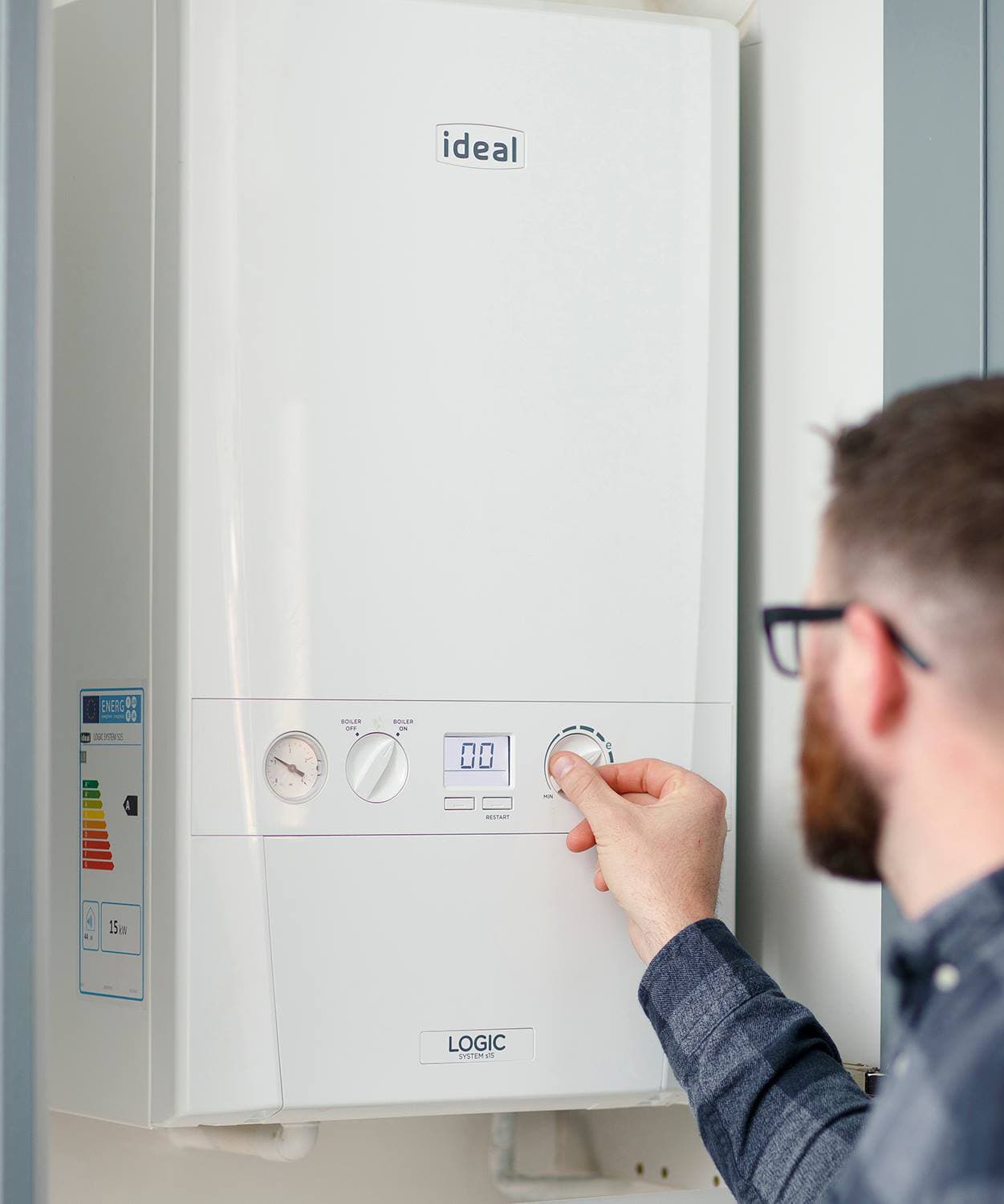
If there is no immediate hazard, write down what has changed. Is there no heating, no hot water, or both? Does the boiler show a code or warning light? Note the exact letters or numbers rather than trying to interpret them. If it is safe to do so, a photo of the display can preserve that information.
Also note when the problem began and whether anything happened just beforehand, such as a power interruption or a change to the heating controls. Mention any unusual noises, repeated stopping and starting, or a smell. These details help distinguish a fault affecting the boiler from one involving the controls or another part of the system. They are clues, not a diagnosis.
Check only the controls you can reach safely
Look at the room thermostat and heating timer to see whether the heating is set to come on and the temperature setting is above the current room temperature. If the display is blank, note that too. You can check whether the boiler’s normal power switch appears to be on, but do not remove covers, open the appliance or handle wiring.
Avoid repeatedly resetting a boiler that keeps shutting itself down because of a fault. A reset may clear a temporary fault, but if the same problem returns, repeated attempts will not explain why it is happening. Record what the boiler displays and leave further investigation to a qualified engineer. Do not adjust internal components or attempt to bypass a safety control.
If you can see a pressure gauge without opening the boiler, note its reading. Pressure requirements vary between systems, so a reading alone does not establish the cause of a breakdown. Do not start refilling or altering the system unless you already know the correct procedure for your appliance and have been advised it is appropriate.
Look for visible changes, not hidden faults
From a safe position, check for water beneath the boiler or around accessible pipework. Note whether a radiator or hot-water tap is affected, or whether the problem seems to involve the whole property. Do not remove panels or move a heavy appliance to look behind it. If you find a leak, keep clear of nearby electrical equipment and tell us where you saw it.
These observations are useful because a loss of heating can come from different parts of the system. A control setting, boiler fault, loss of power or problem elsewhere in the heating system can produce similar symptoms. Guessing at the cause can lead to unnecessary adjustments or obscure what the system was doing when the fault began.
Make the visit easier to assess
Keep the boiler display and its controls accessible, and have any notes or photos ready. If you know the boiler make and model, share those details, but do not search for them by taking the casing apart. Tell us which rooms or outlets are affected and whether the fault is constant or comes and goes.
For a safe, non-urgent fault, these checks can make the conversation clearer without putting you at risk. For a suspected gas leak, carbon monoxide concern or dangerous leak, leave first and seek urgent help rather than waiting to collect details.
For an overview of the service, see our Emergency Heating Call-Outs page. Here at DJ Plumbing and Heating Services Ltd, we provide emergency heating call-outs in Dumbarton and nearby areas. If you need help, get in touch and share the symptoms you have safely observed.